The Montessori Curriculum
What is the Montessori curriculum in the preschool?
The Curriculum
The Montessori Early Childhood curriculum follows a 3-year sequence. Because the teacher guides your child through learning at her own pace, her individualized learning plan may exceed the concepts she teaches in a classroom environment in which all children learn the same concept at the same time.
Montessori Learning Materials
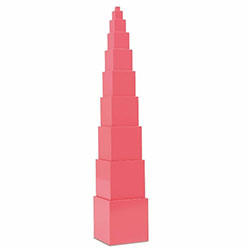
Montessori materials are not only beautiful and inviting, but ingenious. They teach only 1 skill at a time to allow the child to work independently and master the intended concept. The materials are also “self-correcting.” This means the child is able to identify if they have done an activity accurately and try again without intervention from a teacher. For example, if a large block is stacked atop a tower of shorter blocks, the tower will fall down. Working with self-correcting materials helps children develop confidence and self-sufficiency and promotes critical thinking. In a sense, they become their own teachers—a skill that will last for life.
What are the 5 areas of Montessori?
Practical Life
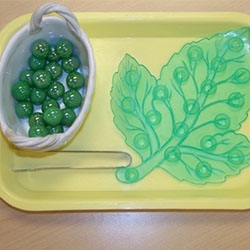
Children learn daily-life skills, such as how to get dressed, prepare snacks, set the table, and care for plants and animals. They also learn appropriate social interactions, such as saying please and thank-you, being kind and helpful, listening without interrupting, and resolving conflicts peacefully. In addition to teaching specific skills, Practical Life activities promote independence, and fine- and gross-motor coordination.
Sensorial
Math
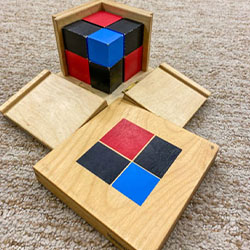
Through hands-on activities, children learn to identify numerals and match them to their quantity, understand place-value and the base-10 system, and practice addition, subtraction, multiplication, and division. They also explore patterns in the numbering system. With an exploratory approach, children do more than just memorize math facts; they gain a firm understanding of the meaning behind them.
Language
In Montessori education, language learning begins with sound. Long before reading books, children develop phonetic awareness through conversation, songs, and storytelling that naturally expand their vocabulary. Materials like sandpaper letters let children trace the shape of sounds while saying them aloud, linking touch, movement, and memory.
Writing comes before reading. With the movable alphabet, children build words to express their thoughts even before they can read them on paper. This hands-on process nurtures confidence and fluency, allowing reading to unfold naturally and joyfully.
Cultural Studies
Through hands-on activities, children learn to identify numerals and match them to their quantity, understand place-value and the base-10 system, and practice addition, subtraction, multiplication, and division. They also explore patterns in the numbering system. With an exploratory approach, children do more than just memorize math facts; they gain a firm understanding of the meaning behind them.